
 Wildlife
of New Zealand
Common Greenshank
Waders & Shorebirds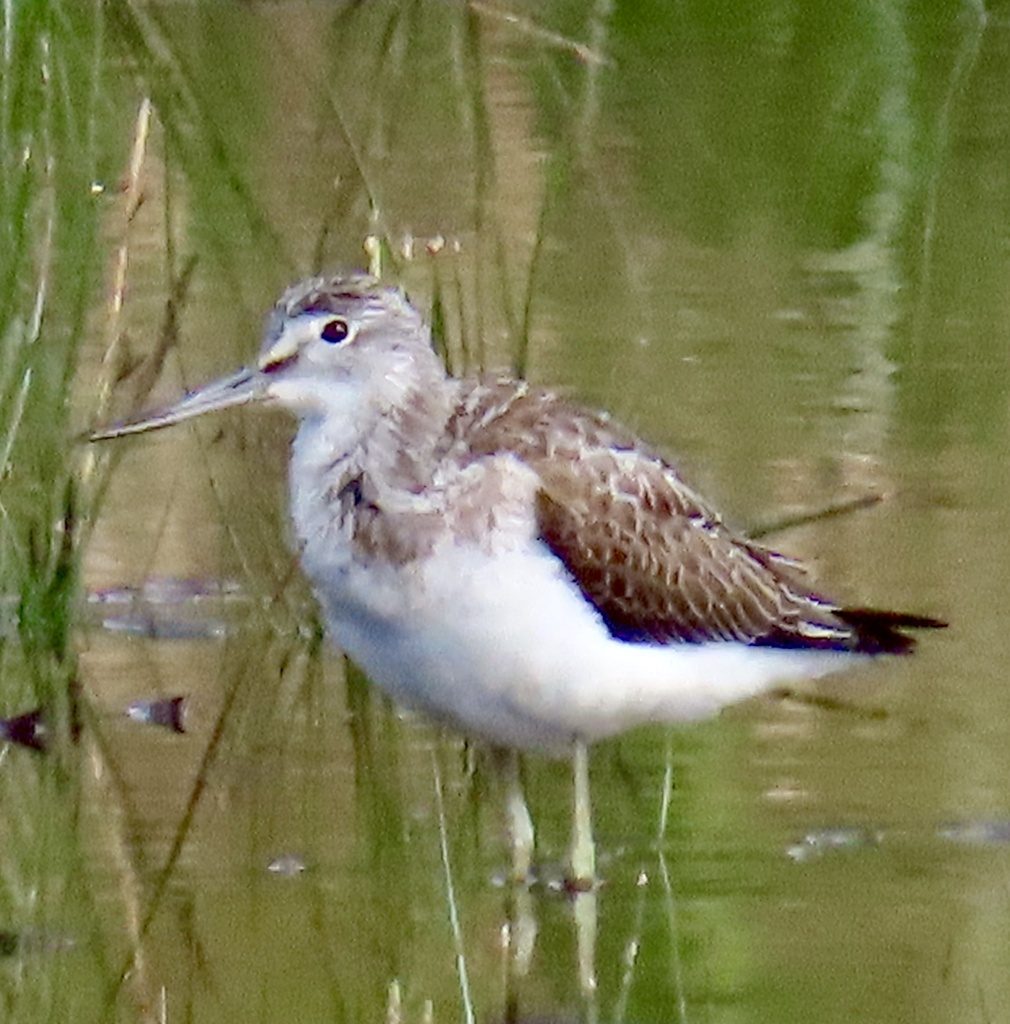
Photo: Irene · CC0
Tringa nebularia
Basic stats
Habitat
Estuarine and brackish lagoon margins, saltmarsh and shallow pools
Range
Rare visitor
Size
Length 30–35 cm; weight 150–280 g
The common greenshank is a large, long-legged sandpiper that now reaches New Zealand only as a rare vagrant. A grey-brown wader with white underparts, black breast streaking when breeding, a slightly upturned blackish bill and yellowish-green to blue-green legs. In flight a white V up the back contrasts with the grey-brown wings. The call is a sharp 'tew tew tew'. The marsh sandpiper is smaller with a finer bill, and the lesser yellowlegs has yellow legs and a square white rump.
It breeds across Eurasia and winters in Africa, Asia, Indonesia and Australia. In New Zealand mainland records include Porirua Harbour, Kaipara Harbour, Lake Ellesmere, the Manawatū estuary, Miranda and Riverton, plus the Chatham, Snares and Campbell Islands. It feeds on crustaceans, small fish and worms, often by running through shallow water after shrimp and fish. Visitors favour estuarine and brackish margins, often near pied stilts.
The New Zealand classification is Vagrant, with sightings declining greatly in recent decades; there have been eight accepted mainland records since 2004. Sightings are too rare to plan for; check estuaries and lagoon margins such as Lake Ellesmere and the Manawatū estuary during summer.
Quick answers
- What habitat does the Common Greenshank live in?
- Estuarine and brackish lagoon margins, saltmarsh and shallow pools
- Where is the Common Greenshank found?
- Rare visitor
- How big is the Common Greenshank?
- Length 30–35 cm; weight 150–280 g