
 Wildlife
of New Zealand
Eastern Curlew
Waders & Shorebirds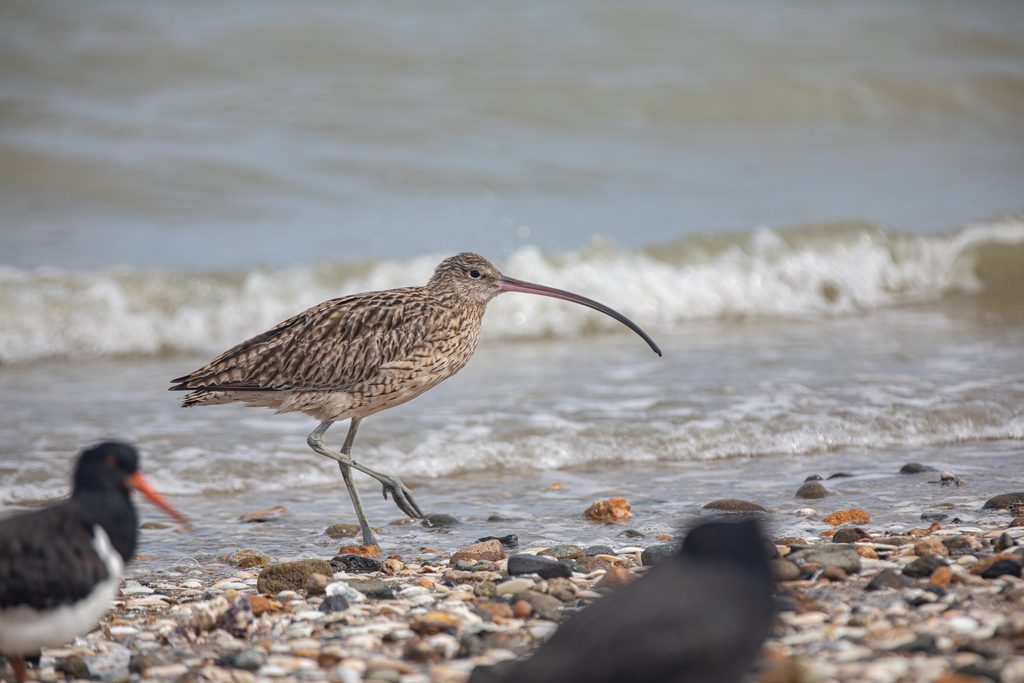
Photo: Shaun Lee · CC BY 4.0 (May be cropped or resized)
Numenius madagascariensis
Basic stats
Habitat
Large harbours, estuaries and tidal flats
Range
A few each summer
Size
Length about 63 cm; weight about 900 g
The eastern curlew is the largest wader to reach New Zealand, a bulky brown bird with the longest bill of any local shorebird. A bulky brown wader with a streaked head and neck, a thin white eye-ring and a bill about 20 cm long that curves sharply downward. Sexes look alike, though females are larger with longer bills. Whimbrels and bristle-thighed curlews are smaller with shorter bills, and the Eurasian curlew has a white rump.
A handful arrive each summer, between September and November, and use large harbours and estuaries from Parengarenga to Awarua Bay. Manukau Harbour and Farewell Spit are the strongholds. Birds leave in March and April. Eastern curlews are wary and hard to approach. They feed mainly on crabs and small molluscs, typically pulling off a crab's legs before swallowing the rest, and may be solitary or join other curlews and bar-tailed godwits.
The New Zealand classification is Vagrant, although small numbers arrive regularly; counts fell from the mid-40s in the 1980s to fewer than 10 a year. Manukau Harbour and Farewell Spit are the most reliable sites in summer.
Quick answers
- What habitat does the Eastern Curlew live in?
- Large harbours, estuaries and tidal flats
- Where is the Eastern Curlew found?
- A few each summer
- How big is the Eastern Curlew?
- Length about 63 cm; weight about 900 g